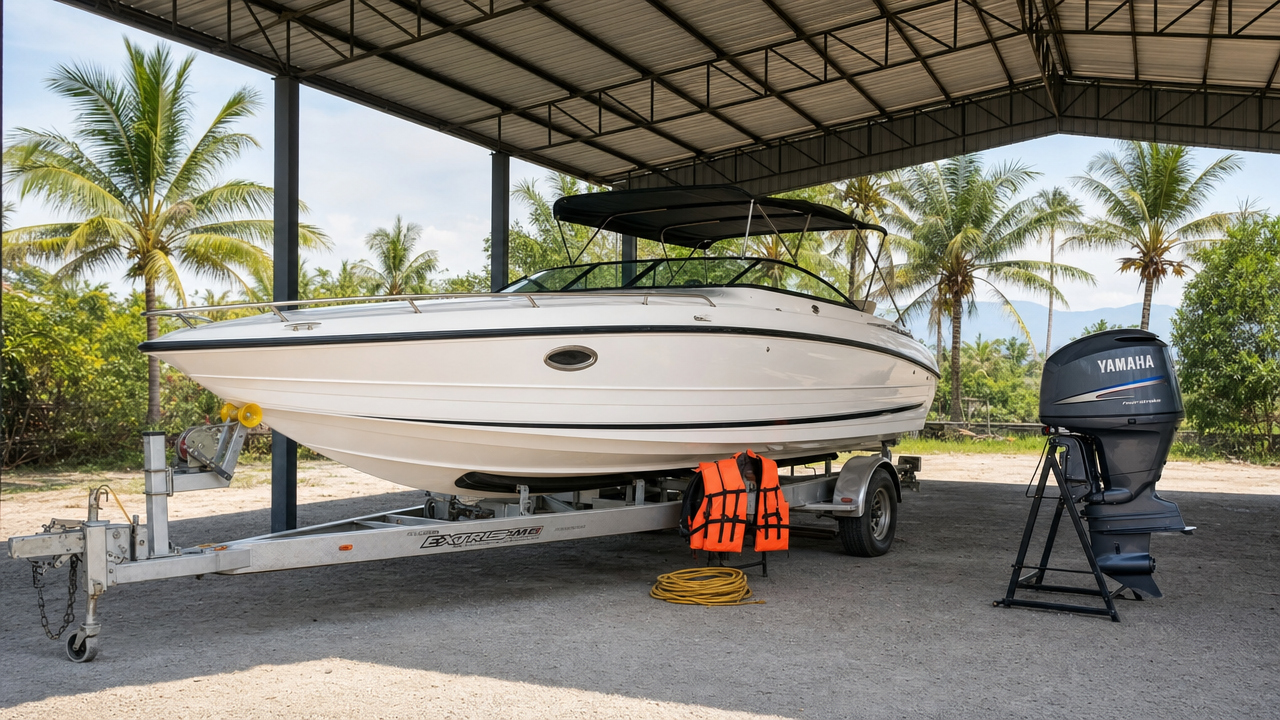
A boat that isn’t in the water doesn’t look after itself. Leave a longtail, a jet ski, or a trailer sitting out through a Samui wet season and you’ll find out the hard way: salt air works into every metal fitting, monsoon rain pools where it shouldn’t, and an outboard that hasn’t been run or protected for a few months can seize up faster than most owners expect.
Anyone who’s spent a season here with a boat, or who’s heading home for a stretch and doesn’t want to sell it, ends up asking the same question: where does this go when it’s not on the water?
Why a Break From the Water Isn’t a Break From Damage
Koh Samui sits at roughly 75-85% humidity for most of the year, and that number doesn’t care whether what’s sitting in it is a cardboard box or an engine block. Salt air off the water speeds up corrosion on anything metal, fabric covers trap moisture against gelcoat and upholstery, and a hull left in direct sun for weeks fades and cracks faster than most owners plan for.
None of this is unique to boats, but boats concentrate the problem. A trailer left on soft ground rusts through its frame. Ropes, life jackets, and fenders left in a damp shed grow mildew. An outboard that sits untouched can gum up its fuel system in a matter of weeks in this climate, not months.
Who Actually Needs This, Beyond the Obvious
It’s not just people with a proper boat sitting idle. Dive and snorkel operators running a seasonal schedule often have a spare tender or jet ski that only earns its keep half the year. Fishing guides between charters need somewhere for gear, engines, and trailers that isn’t taking up space at the house. Expats who bought a small boat for weekend trips and are heading home for the low season don’t want to leave it exposed on a driveway for four months, and people selling a boat sometimes need somewhere secure to keep it while they find a buyer.
None of these are edge cases. They’re the same seasonal rhythm that drives most of the storage demand on this island, just applied to something with an engine instead of a wardrobe.
Here’s the Honest Limit: This Isn’t a Marina
The opinion worth stating plainly: a self-storage unit is the right answer for trailers, outboards, jet skis, dinghies, and the gear that goes with them, not for a keel yacht that needs a proper dry-stack or marina berth. Samui Storage & Moving Solutions stores vehicles, including boats, alongside household and business items, but a unit has doors and dimensions, not a travel lift. If what you’ve got is small enough to trailer or carry, storage solves the problem. If it isn’t, you’re better off asking about marina dry storage and using a unit for the outboard, electronics, and loose gear instead.
That distinction matters because it’s the difference between a plan that actually works and one that sounds fine until moving day.
What Actually Protects a Boat in Storage
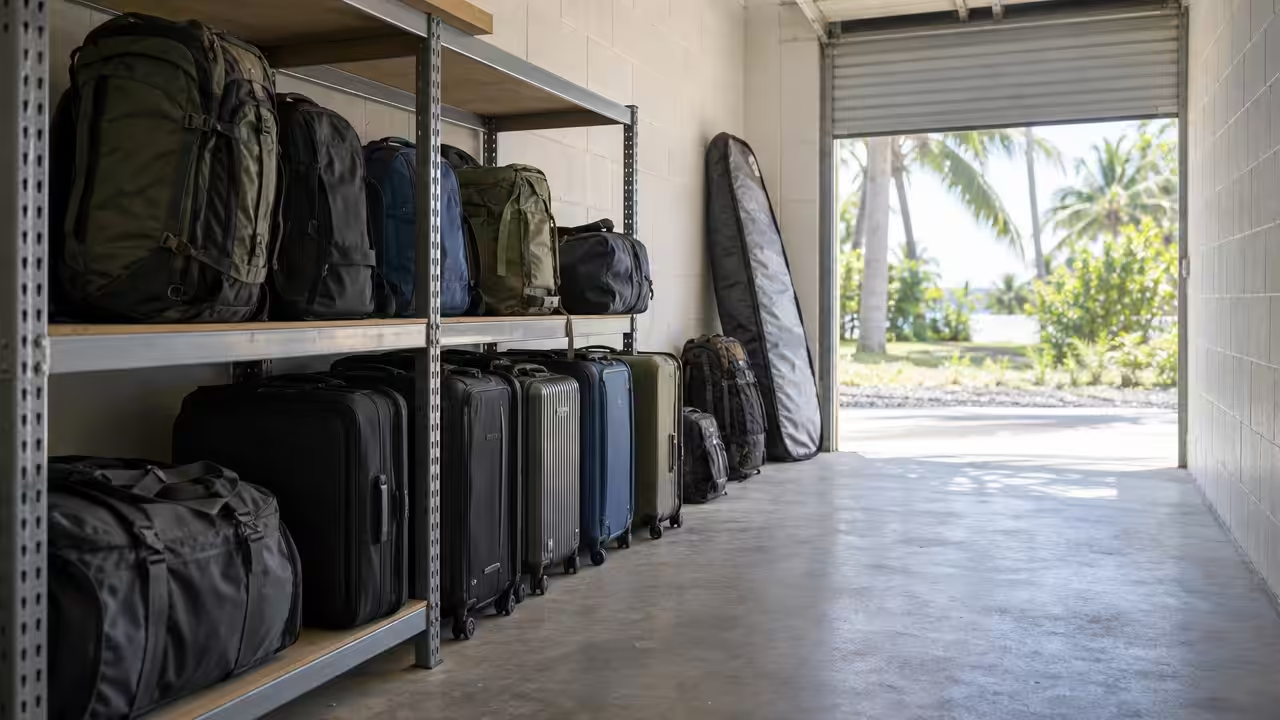
Ventilation is the part people underestimate. Samui Storage & Moving Solutions fits moving fans and ventilation systems in every unit and runs pest control across the whole site monthly, which matters as much for a boat cover and a bag of dive gear as it does for furniture. A covered boat sitting in still, humid air is exactly the setup that grows mildew under the cover within weeks. Airflow is what stops that.
Security is the other half. Outboards and marine electronics have a resale market, which makes them a target if they’re left visible in a yard. A unit with a door that locks and a site with camera coverage and staff on the premises is a meaningfully different proposition from a tarp in the garden. If you want the detail on how the facility handles access and monitoring, that’s worth asking about directly when you call, alongside unit sizes and rates for your specific setup.
Getting a Boat, Trailer, or Engine Into Storage
The practical side is simpler than people expect. Flexible, easy-in easy-out rental terms mean you’re not signing a year-long contract to store a jet ski for one low season, you rent for as long as you actually need and adjust from there. If getting the trailer or boat to the facility is the awkward part, especially if you don’t have a vehicle rated to tow it, it’s worth asking about coordinating that alongside the removal and transport services, rather than treating it as two separate problems.
Before you drop anything off, drain fuel systems where you can, disconnect batteries, and give the hull a rinse to get salt off before it sits still for months. A unit with good airflow does a lot of the work, but starting with something clean and dry gets you a much better result when you come back for it.
Getting Set Up
Samui Storage & Moving Solutions has been running storage and removals on the island since 2009 as a family-owned business, and boats have been part of what they handle alongside cars, motorbikes, and household items for most of that time. You can read more about the company and how the facility operates if you want the background before you commit to anything.
If this is your first time renting space here for anything, not just a boat, it’s worth a look at what other first-time renters typically get wrong when packing a storage unit efficiently, since a lot of it applies just as much to gear, trailers, and engines as it does to boxes. When you’re ready to talk sizes, rates, and whether your particular boat or trailer will actually fit, the contact page gets you a phone call, WhatsApp message, or email away from a straight answer.