Most people don’t think about where their paperwork lives until the day they need it. Immigration wants the original TM30, not a photo of it. The land office wants a signed lease, not a PDF. A tax audit wants the actual invoice, not your memory of what it said. If that document is sitting in a cardboard box in a spare room during rainy season, you’ve got a problem you didn’t know you had.
Expats and small business owners on Samui accumulate more paper than they expect: visa extension stamps, TM30 reports, work permits, condo or land lease agreements, vehicle blue books, invoices, tax filings, sometimes marriage or birth certificates. None of it is replaceable in a hurry, and most of it needs to survive years, not weeks.
Why Paper Doesn’t Belong in a Cardboard Box on a Shelf
Koh Samui sits at roughly 75-85% humidity for most of the year. Paper absorbs that moisture whether you notice it or not. Pages stick together, ink fades, staples rust through and leave orange stains, and mold spots start showing up on anything that’s been sitting still for a few months. A drawer or a stack of boxes in an unventilated room doesn’t slow this down, it just hides it until you open the box and find out.
Here’s the opinion part: a laminating pouch or a plastic sleeve doesn’t fix this, and it can make it worse. Seal a slightly damp document in plastic and you’ve built a small greenhouse for mold. What actually works is dry air moving around the document, which is exactly what a cardboard box on a closet floor doesn’t give you.
What Expats Actually Need to Keep, and Why the Original Matters
Immigration and the land office in Thailand are still very much paper-based institutions. A scanned copy on your phone is useful for reference, but when you’re renewing a visa, registering a vehicle, or dealing with a property transaction, someone is going to ask for the original, signed, stamped document. Losing it doesn’t just cost you an afternoon, it can mean re-issuing paperwork from an embassy or government office that’s a plane ride away.
The documents worth protecting properly usually fall into a few groups: immigration paperwork (TM30, extension stamps, work permit), property documents (lease, chanote copies, purchase agreements), vehicle registration, and anything tied to a business, invoices, contracts, tax filings. Keeping these together, dry, and findable is worth more than most people budget for until the day they can’t find one.
Small Business Recordkeeping on an Island That Floods
If you run a shop or a small operation on Samui, your paper trail is usually sitting in the same building as your stock, which means it’s exposed to the same risks. A flooded storeroom during the rainy season doesn’t just cost you inventory, it can wipe out the receipts and invoices you need for your own tax filings. Separating your records from your physical retail space means one bad storm doesn’t take out both at once.
This is one of the reasons a proper facility matters more than people assume. Samui Storage & Moving Solutions runs monthly pest control and fits moving fans and ventilation systems in every unit, which is exactly the combination that keeps paper dry and bug-free rather than damp and eaten through. There’s a full breakdown of what proper storage security looks like on Koh Samui if you want the details on cameras, access control, and on-site staff, all of which matter as much for a box of contracts as they do for furniture.
What a Unit Solves That a Home Drawer Doesn’t
Beyond the climate control, there’s the access question. 24/7 camera coverage of entry points, coded or key-card access with a log of who came and went, and on-site staff doing rounds all mean your records aren’t just protected from humidity, they’re protected from someone walking off with them too. That matters more than people expect for business records, which occasionally hold information you’d rather not have wandering around.
You also don’t need a full room for a filing box. With flexible, easy-in easy-out rental terms and no long-term contract locking you in, you can start with whatever space actually fits your paperwork and adjust later if your storage needs grow into something bigger, like the household items or inventory that often end up going in alongside the documents anyway.
A Simple System, If You’re Setting This Up
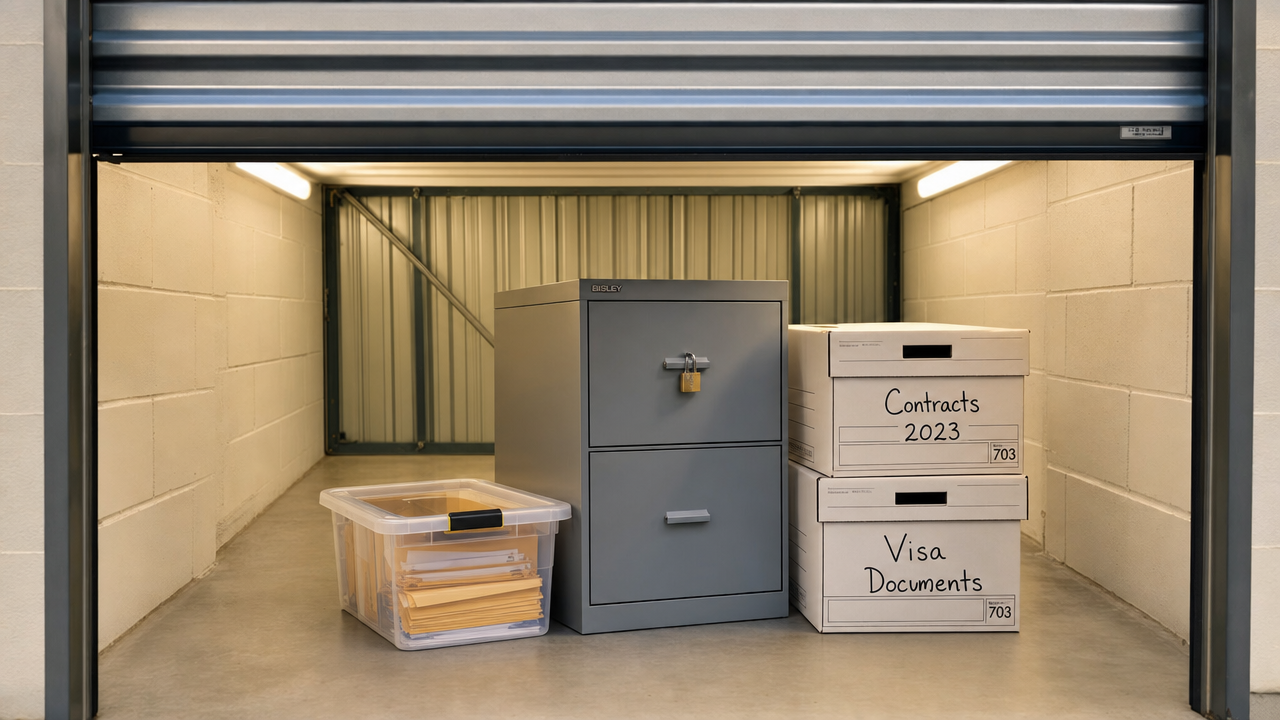
Don’t just tip a box of loose paper into a unit and call it done. Sort by category before it goes in, immigration, property, vehicle, business, and use labeled folders or sealed envelopes rather than one pile. Keep a digital scan as a backup for your own reference, but don’t treat the scan as a substitute for the original. Government offices in Thailand still want to see the real thing.
A good habit is to check the box once a year, ideally around whenever you’re already handling your visa renewal, since you’ll have the paperwork out anyway. It takes a few minutes and it’s the easiest way to catch a damp page or a rusted staple before it becomes a real problem.
Getting Set Up
None of this is complicated, it’s just easy to ignore until the one time you actually need that lease agreement or that TM30 and can’t put your hands on it. Samui Storage & Moving Solutions has been running storage on the island since 2009 as a family-owned business, and you can read more about the company and how it operates if you want the background. If you’ve never rented a unit before, the first-timer’s guide to self storage on Koh Samui covers the basics of getting started, and it applies just as much to a box of paperwork as it does to furniture.
If you’re moving belongings and documents together, whether that’s shipping things over from home or relocating from another part of Thailand, it’s worth arranging storage and removal services at the same time so you’re not coordinating two separate companies for what’s really one job. When you’re ready to talk specifics, the contact page gets you a phone call, WhatsApp message, or email away from a straight answer about space, rates, and what setup makes sense for keeping your paperwork safe.