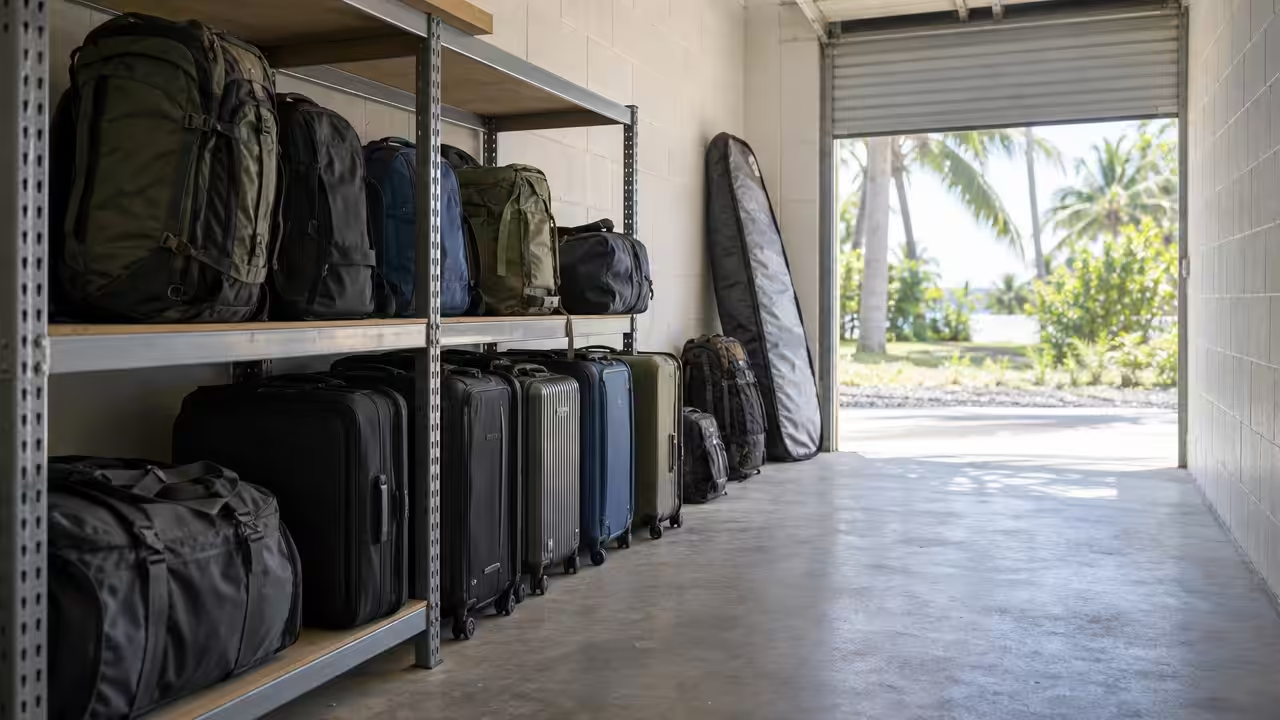
Most storage damage on this island is decided in the two days before the unit door closes, not in the months afterwards.
People spend real money on a good facility and then undo a chunk of that protection on moving day, usually by rushing. Samui sits at roughly 75 to 85 percent humidity for most of the year, which means anything that goes into a room in poor condition stays in poor condition and slowly gets worse. Here’s what’s worth doing before the boxes go in.
The Step Everyone Skips Is the One That Matters Most
If you only do one thing from this post, make it this: everything goes in clean and completely dry, with no exceptions.
This sounds obvious and is skipped constantly, because moving day runs late and the last load always gets packed in a hurry. But a jumper that came off the line still slightly damp in November doesn’t dry out in a closed room. It stays damp, it shares that moisture with everything it’s touching, and four months later you’ve got a mould problem across an entire box rather than one item.
The specific offenders are predictable. Clothes and linens that didn’t quite finish drying. Fridges and washing machines that weren’t drained and left open to air out for a full day before the move. Outdoor furniture that got rinsed the morning of. Anything from a bathroom. Sports gear and dive kit, which are almost always put away damp. Give yourself an extra day for this rather than an extra hour, because it’s the highest-value hour of the whole job and it’s the one that gets cut.
Food Is a Hard No, Including the Sealed Stuff
Worth separating out because people genuinely don’t realise it applies to them. Nothing organic goes into a unit — not sealed dry goods, not tinned food, not the bag of rice that seemed fine, not pet food, not spices.
A facility can be pest-controlled monthly and still be no match for someone who stores a box of pasta. It’s the single most common way a small pest problem starts, and it affects your neighbours’ units as much as your own. Empty the kitchen boxes properly before they go anywhere near the truck.
Wrap for Airflow, Not for Waterproofing
The instinct with humidity is to seal things away from it. That instinct backfires, and it’s covered in more depth in the post on storing documents and records, but the short version applies to furniture too: sealing slightly humid air against your belongings just gives mould somewhere private to work.
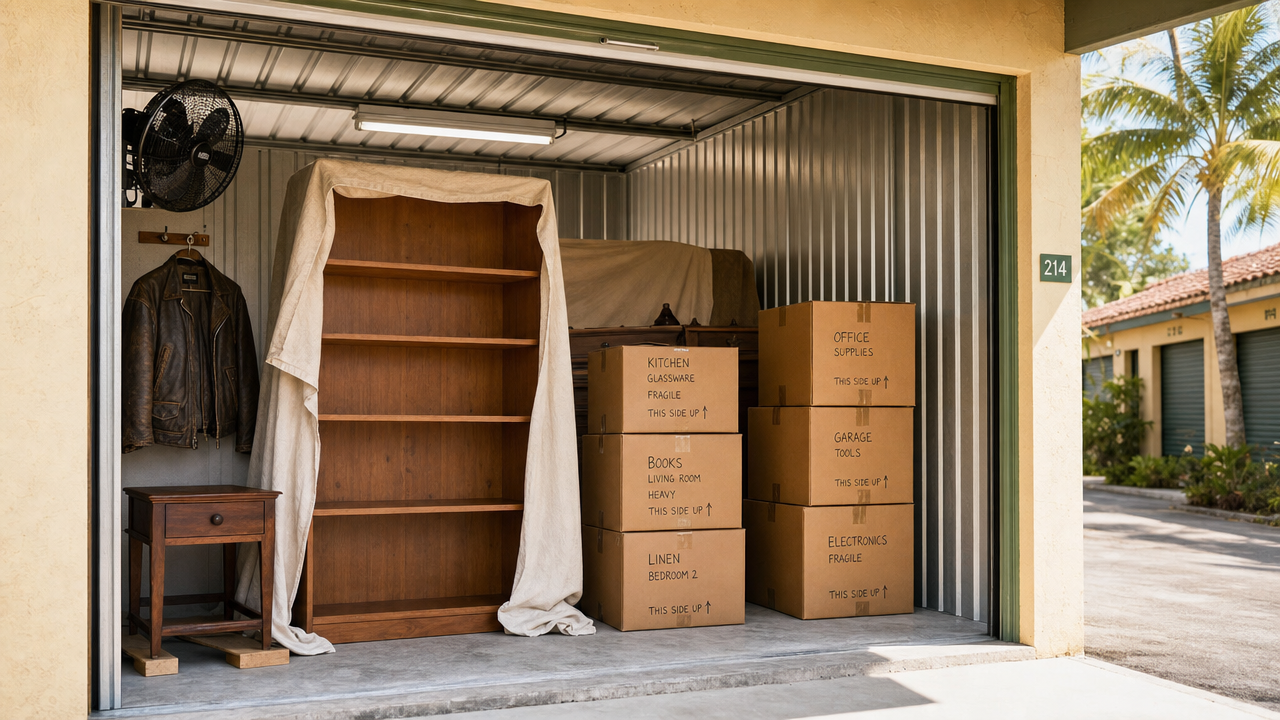
Cotton sheets, moving blankets, and breathable covers beat shrink wrap for furniture. Cardboard is fine for most household goods in a ventilated room. Save the plastic bins for genuinely non-porous things like tools, ceramics, and hardware, and don’t seal those airtight either.
Know Which of Your Things Are Actually at Risk
Treating everything as equally fragile wastes an afternoon on items that were never going to be a problem.
Leather is the most vulnerable thing most people store. Bags, shoes, jackets, leather sofas — they grow surface mould faster than anything else in a room. Clean them, dry them fully, and give them air rather than burying them at the bottom of a stack.
Electronics fail at the contacts rather than visibly. Take the batteries out of everything, because a battery that leaks inside a stored device is a guaranteed write-off and it’s a thirty-second job to prevent. Wooden furniture wants to be off the floor and not flush against a wall. Mattresses and cushions need to be dry going in and covered with something that breathes. Metal tools benefit from a light wipe of oil if they’re staying more than a few months.
Build the Stack So Air Can Move Through It
Every room at Samui Storage is fitted with a moving fan and a ventilation fan, and the site is pest-controlled monthly. Those systems can only work on air they can reach.
Leave a gap between your stack and the walls — a hand’s width is plenty. Get things off the floor where you can, whether that’s pallets, a couple of planks, or just putting sturdy boxes on the bottom and vulnerable items higher. And look at where the fans actually are before you start stacking, because parking a wardrobe directly in front of a ventilation fan quietly cancels out the thing you’re paying for.
It’s also the practical reason not to rent the very smallest room your belongings will squeeze into. Airflow needs somewhere to go.
Label Like You Won’t Remember, Because You Won’t
Write what’s in the box on at least two sides, not the top, since the top is what you’ll have another box sitting on. Note anything fragile or anything you’re likely to want back early, and keep those near the door.
If you’re storing for more than a year, take a photo of the loaded room on your phone before you shut the door. It costs nothing and it saves an unpleasant half hour eighteen months later trying to remember whether the drill went into storage or got sold. That habit pairs well with the once-a-year check-in described in the piece on long-term storage on Samui.
Or Hand the Whole Job Over
Plenty of people read all of this, agree with every word, and then run out of daylight and throw things into boxes anyway. That’s a normal outcome, not a personal failing.
If that’s the likely ending, the removals service includes a packing service and packing materials on request, which puts the decisions in the hands of people who see what comes back out of these rooms every week. It generally costs less than replacing one ruined piece of furniture.
Samui Storage has been a British family-owned business here since 2009, and terms are easy-in easy-out, so you’re not committing to a guess about how long you’ll need the room. If you’re unsure whether your load needs the full treatment or just a sensible stack of boxes, describe it on the contact page or over WhatsApp and you’ll get a straight opinion rather than an upsell. If you’ve never rented a unit before, the first-timer’s guide is the place to start.